TEL:+86 13179668188 E-MAIL:alina@volsn.com


BLOG
How to Select Jaw Opening for Plate Clamps: A Complete Guide for Safe Steel Plate Lifting
How to Select Jaw Opening for Plate Clamps | Complete Selection Guide Learn how to select the correct jaw opening for steel plate lifting clamps. Understand plate thickness, working load limit (WLL), gripping range, and safety requirements to ensure safe lifting operations. How to Select Jaw Opening for Plate Clamps Quick Answer The correct jaw opening for a plate lifting clamp should match the actual thickness of the steel plate while remaining within the clamp manufacturer’s specified gripping range. Never use a clamp with a jaw opening that is too large or too small for the material. Proper jaw selection improves gripping force, prevents slippage, and ensures safe lifting in accordance with recognized lifting standards and manufacturer instructions. Key Takeaways Why Is Jaw Opening Important? Jaw opening is one of the most important selection criteria for a plate lifting clamp. It determines how securely the clamp grips the steel plate during lifting. A properly matched jaw opening allows the clamp’s gripping mechanism—whether cam, serrated jaw, or friction-based design—to generate the intended holding force. If the jaw opening does not match

Can a Horizontal Lifting Clamp Be Used Alone? Safety Rules Every Operator Should Know
Can a Horizontal Lifting Clamp Be Used Alone? Safety Rules & Best Practices Can a horizontal lifting clamp be used alone? Learn why horizontal lifting clamps must always be used in pairs with a spreader beam, understand the safety risks, and discover industry best practices for steel plate handling. Can a Horizontal Lifting Clamp Be Used Alone? Quick Answer No. A horizontal lifting clamp should never be used alone to lift a steel plate. Horizontal lifting clamps are designed to work in pairs (2 clamps) or sets of four (4 clamps) together with a properly rated spreader beam or lifting beam. Using a single horizontal clamp can cause load imbalance, plate slippage, excessive bending, and potentially catastrophic lifting failures. For single-point lifting, a vertical lifting clamp such as a CD or CDH model is the appropriate solution. Key Takeaways Why Can’t a Horizontal Lifting Clamp Be Used Alone? The answer lies in load distribution. Horizontal lifting clamps grip the plate from its edges. Unlike vertical lifting clamps, they do not suspend the load directly beneath the lifting point. Instead, they
Horizontal vs Vertical Lifting Clamps: Key Differences, Applications, and Safety Rules for Steel Plate Handling
Horizontal lifting clamps and vertical lifting clamps are designed for completely different lifting applications. Using the wrong clamp type may result in load instability, plate deformation, or lifting failure. What Is the Difference Between Horizontal and Vertical Lifting Clamps? The main difference is the direction in which the steel plate is lifted. Feature Horizontal Lifting Clamp Vertical Lifting Clamp Lifting Direction Horizontal Vertical Typical Models PDB, AMS, LC CD, CDH, YDG Number Required 2 or 4 Usually 1 Single Clamp Use Not Allowed Allowed Spreader Beam Required Yes No Best For Thin and large plates Thick steel plates Plate Turning No Yes Single Point Lift No Yes Expert Rule A horizontal lifting clamp should never be used as a single lifting point. This is one of the most important safety principles in steel plate lifting. When Should You Use a Horizontal Lifting Clamp? Horizontal lifting clamps are designed for moving steel plates while maintaining the plate in a flat, horizontal orientation. Typical industries include: Typical applications include: Why Must Horizontal Lifting Clamps Be Used in Pairs? This is a question
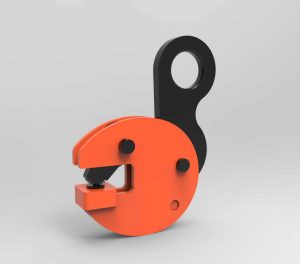
Structural Difference Between CD and CDH Vertical Lifting Clamps
Which Model Is Better for Steel Plate Handling? When selecting a vertical lifting clamp for steel plates, many buyers assume that CD and CDH clamps are nearly identical. While both are designed for vertical lifting applications, there is a significant structural difference that directly affects lifting flexibility, safety, and operational efficiency. Understanding these differences is essential for distributors, lifting equipment suppliers, fabrication workshops, steel service centers, shipyards, and construction contractors. In this guide, we will explain the structural design, lifting performance, application scenarios, and selection criteria for CD and CDH vertical lifting clamps. Overview of CD and CDH Vertical Lifting Clamps Both CD and CDH models belong to the vertical plate lifting clamp family and are commonly used for handling steel plates, metal sheets, fabricated structures, and heavy steel components. Both models feature: However, the lifting ring structure is fundamentally different. The Key Structural Difference CD Vertical Lifting Clamp-Equipped with a 180° Rotating Shackle The CD model features a rotating lifting shackle that can swivel freely through 180 degrees. This design allows the clamp to: Because of its flexibility, the

Important Safety Tips for Using a Lifting Clamp
A Guide for Safe and Efficient Operation The lifting clamp is an essential tool for safely lifting and transporting heavy steel plates, widely used in construction, manufacturing, and shipping industries. Proper usage of a lifting clamp can significantly boost work efficiency and reduce accident risks. However, improper use may lead to equipment damage or personal injury. This guide covers the key safety tips for using a lifting clamp, helping you achieve a smooth and secure lifting experience. 1. Verify the Lifting Clamp’s Load Capacity Before using any lifting clamp, ensure that its load capacity is sufficient for the weight of the material you plan to lift. Each lifting clamp has a clearly marked maximum load capacity, and the load weight should always be lower than this value to prevent overload-related incidents. 2. Inspect the Locking Mechanism Most lifting clamps are equipped with a locking mechanism to secure the load during lifting. Before operation, ensure that the locking mechanism is intact and functioning, as this will help keep the lifting clamp securely fastened to the load, reducing the risk of accidental falls. 3.