TEL:+86 13179668188 E-MAIL:alina@volsn.com


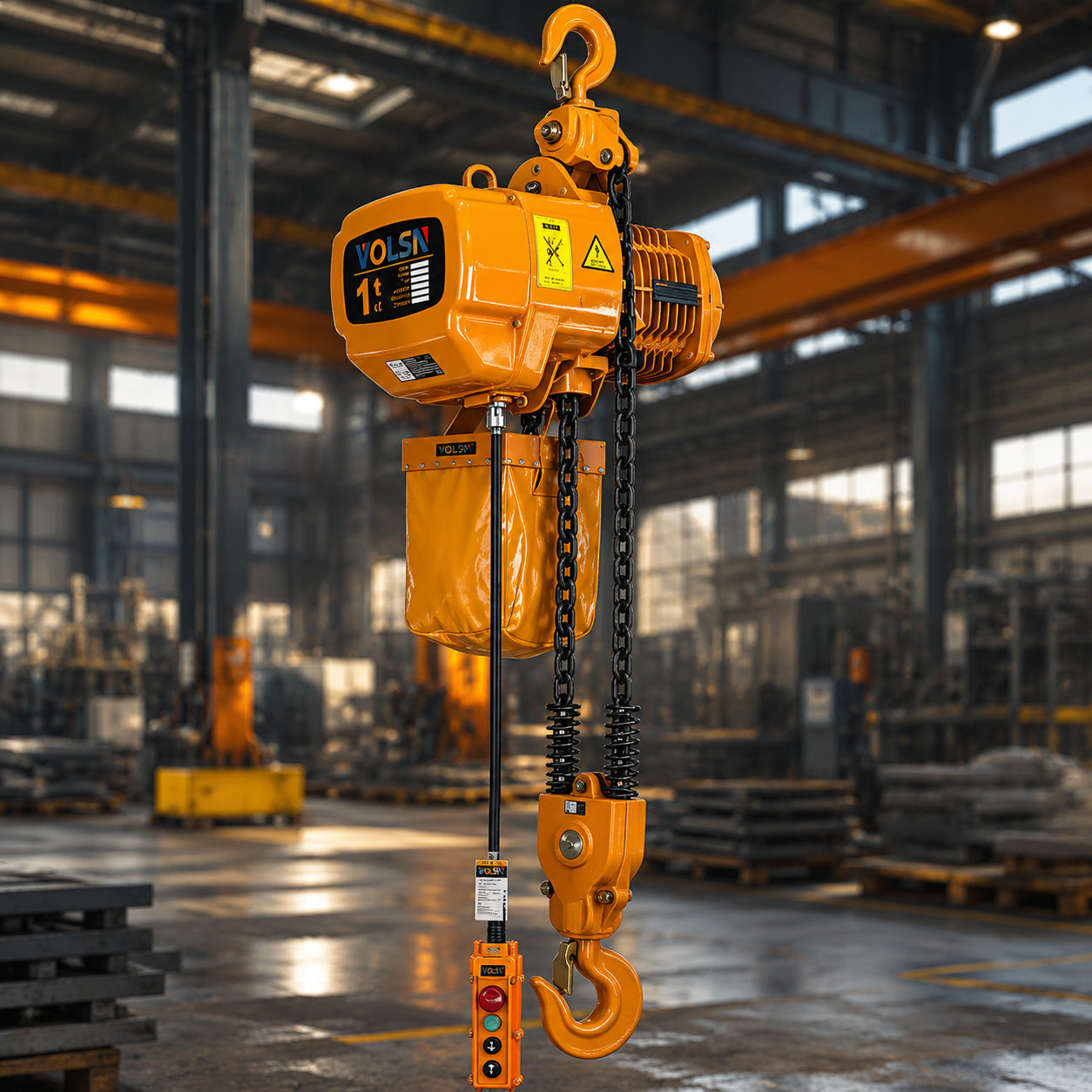

Introduction
Choosing the correct electric chain hoist capacity is one of the most important decisions before purchasing lifting equipment.
Many buyers ask:
“What capacity electric chain hoist do I need?”
The answer is not simply based on the weight of the load.
The correct hoist capacity depends on:
- Maximum load weight
- Working frequency
- Lifting environment
- Safety requirements
- Application conditions
Selecting the right capacity helps ensure safer operation, longer equipment service life, and better lifting efficiency.
What Does Electric Chain Hoist Capacity Mean?
Electric chain hoist capacity refers to the maximum rated load that the hoist is designed to lift safely under normal working conditions.
For example:
- 1 ton electric chain hoist → designed for loads up to 1,000 kg
- 3 ton electric chain hoist → designed for loads up to 3,000 kg
- 5 ton electric chain hoist → designed for loads up to 5,000 kg
The rated capacity is usually marked on the product nameplate.
Important:
A hoist should never be operated beyond its rated lifting capacity.
Step 1: Determine Your Maximum Load Weight
The first step is identifying the heaviest load you need to lift.
Consider all lifting components, including:
- Product weight
- Fixtures
- Lifting accessories
- Clamps
- Slings
- Additional attachments
For example:
A machine component weighs 2,000 kg.
The lifting accessories weigh 100 kg.
The total lifting load is:
2,000 kg + 100 kg = 2,100 kg
The selected hoist capacity must be higher than the total load.
Step 2: Consider A Safety Margin
Choosing a hoist capacity exactly equal to your load weight is usually not recommended.
Industrial lifting applications should consider additional capacity margin.
Example:
| Load Weight | Recommended Capacity |
|---|---|
| 500 kg | 1 ton hoist |
| 1,500 kg | 2 ton hoist |
| 3,000 kg | 5 ton hoist |
| 5,000 kg | 7.5 ton or higher |
The correct selection depends on:
- Working conditions
- Lifting frequency
- Industry requirements
- Manufacturer recommendations
Step 3: Consider Your Working Frequency
The same lifting capacity may perform differently depending on usage frequency.
Occasional Lifting
Examples:
- Maintenance work
- Equipment replacement
- Occasional material handling
A standard industrial hoist may be suitable.
Frequent Daily Operation
Examples:
- Production lines
- Assembly stations
- Continuous material handling
Consider:
- Higher duty rating
- More durable components
- Better thermal performance
A larger capacity or industrial-grade configuration may provide better long-term reliability.
Step 4: Check The Lifting Environment
The working environment affects hoist selection.
Consider:
Indoor Factory Use
Common applications:
- Workshops
- Manufacturing plants
- Warehouses
Standard electric chain hoists are usually suitable.
Harsh Environments
Examples:
- Dusty areas
- High-temperature environments
- Outdoor applications
Additional protection may be required.
Step 5: Confirm Lifting Height Requirements
Capacity is not the only important factor.
You should also confirm:
- Required lifting height
- Chain length
- Installation position
- Available working space
A correctly selected hoist should match both:
Capacity + Lifting Height
Common Mistakes When Selecting Electric Hoist Capacity
Mistake 1:
Choosing The Hoist Based Only On Product Weight
Many buyers forget to include:
- Hooks
- Slings
- Fixtures
- Accessories
This may result in selecting an undersized hoist.
Mistake 2:
Buying The Largest Capacity Without Considering Application
A larger hoist is not always better.
Oversized equipment may cause:
- Higher investment cost
- Larger installation requirements
- Lower efficiency
The best solution is the correct match between capacity and application.
Mistake 3:
Ignoring Working Frequency
A hoist used once a week and a hoist operating hundreds of cycles per day have different requirements.
Always consider:
- How often you lift
- How long each operation lasts
- Expected service life
Common Electric Chain Hoist Capacity Selection Guide
| Application | Typical Capacity Range |
|---|---|
| Small workshop components | 0.5–1 ton |
| Machine parts handling | 1–3 ton |
| Mold handling | 3–5 ton |
| Industrial equipment lifting | 5–10 ton |
| Heavy manufacturing applications | 10 ton+ |
The actual capacity should always be selected according to the specific lifting conditions.
Fixed Electric Chain Hoist Capacity Selection
For fixed type electric chain hoists such as HHBB series, capacity selection should also consider:
Supporting Structure
The beam or suspension point must support:
- Hoist weight
- Rated lifting load
- Dynamic forces during operation
Application Position
Fixed hoists are suitable when:
- Loads are lifted at a fixed location
- Vertical lifting is the main requirement
- Horizontal movement is unnecessary
Typical applications:
- Machine maintenance
- Mold replacement
- Assembly stations
- Workshop lifting points
How To Choose The Right Electric Chain Hoist Supplier?
A professional supplier should help you evaluate:
- Required lifting capacity
- Working environment
- Duty cycle
- Installation conditions
- Safety requirements
The right lifting solution is not only about the hoist capacity, but also about matching the equipment with the actual application.
Conclusion
Selecting the right electric chain hoist capacity requires more than choosing a number based on load weight.
The correct selection should consider:
✓ Total lifting load
✓ Safety margin
✓ Working frequency
✓ Lifting height
✓ Operating environment
✓ Installation conditions
A properly selected electric chain hoist provides safer operation, better efficiency, and longer service life.
Need Help Selecting The Right Electric Chain Hoist?
Share your:
- Load weight
- Lifting height
- Working frequency
- Application details
Our team can recommend a suitable lifting solution for your operation.