TEL:+86 13179668188 E-MAIL:alina@volsn.com


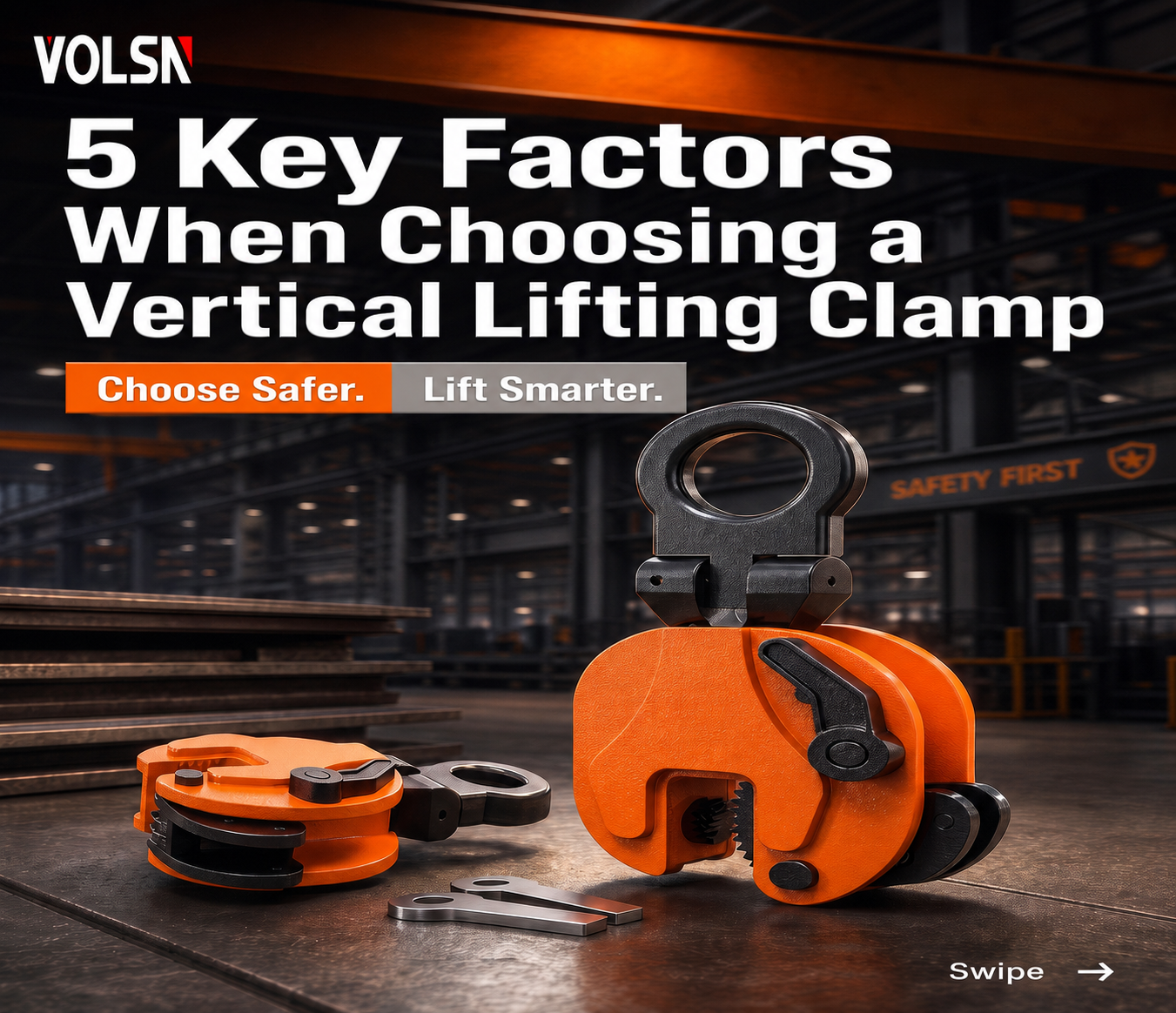

Learn how to choose the right vertical lifting clamp. Discover the 5 key factors including WLL, plate thickness, material compatibility, safety features, and quality standards.
Quick Answer
Choosing the right vertical lifting clamp requires careful consideration of five critical factors: Working Load Limit (WLL), plate thickness range, material compatibility, safety locking system, and manufacturing quality.
A suitable steel plate lifting clamp ensures safer lifting operations, reduces the risk of plate slipping, and improves efficiency in industries such as steel fabrication, shipbuilding, construction, and heavy equipment manufacturing.
Key Takeaways
✅ Check the Working Load Limit (WLL) to ensure the clamp can safely handle the lifting weight.
✅ Match the jaw opening with the steel plate thickness for secure gripping.
✅ Choose the correct clamp based on material and surface conditions.
✅ Verify safety features such as locking mechanisms and hardened gripping jaws.
✅ Select lifting clamps with reliable manufacturing processes and quality certifications.
Detailed Explanation
1. Working Load Limit (WLL): The First Safety Consideration
The Working Load Limit (WLL) is the maximum load that a vertical lifting clamp can safely lift under normal working conditions.
Before selecting a clamp, consider:
- Weight of the steel plate
- Lifting method
- Number of clamps used
- Lifting angle
- Required safety margin
For example, a 3-ton vertical lifting clamp should only be used within its rated capacity. Using an undersized clamp may cause unsafe gripping and increase the possibility of load failure.
Best practice: Always select a lifting clamp with a suitable WLL based on the actual application, not only the product price.
2. Plate Thickness Range: Ensure Proper Grip
Every vertical plate lifting clamp has a specific jaw opening range.
The clamp must match the thickness of the material being lifted.
Important points:
- Too thin a plate may not provide enough gripping force.
- Too thick a plate may exceed the clamp capacity.
- Incorrect jaw selection can reduce lifting safety.
Before purchasing, confirm:
Minimum plate thickness + Maximum plate thickness = Suitable working range
A correctly matched clamp provides stable gripping during lifting, transportation, and positioning.
3. Material Compatibility: Different Applications Need Different Solutions
Not all steel plates have the same surface conditions.
When choosing a vertical lifting clamp, consider:
Carbon Steel Plates
Most common application for standard lifting clamps.
Stainless Steel Plates
May require special gripping surfaces to prevent damage.
Painted or Coated Plates
Require careful consideration because surface coatings can reduce friction.
Oily or Slippery Plates
May require stronger gripping mechanisms.
Selecting the correct clamp design helps protect both the material surface and lifting safety.
4. Safety Locking Mechanism: Prevent Accidental Release
A reliable locking system is one of the most important features of a vertical lifting clamp.
A quality clamp usually includes:
- Spring-loaded locking device
- Safety locking handle
- Hardened gripping cam
- Secure clamping mechanism
The locking system helps maintain grip before lifting and reduces the risk of accidental release during operation.
For professional lifting applications, safety features should never be compromised.
5. Manufacturing Quality and Certification
The performance of a lifting clamp depends heavily on its manufacturing quality.
Reliable vertical lifting clamps usually feature:
Strong Materials
- Forged alloy steel body
- Heat-treated components
- High-strength gripping jaws
Production Control
- Precision machining
- Welding quality inspection
- Surface treatment
- Load testing before shipment
Quality Documentation
Look for:
- CE certification
- ISO 9001 quality system
- Third-party inspection reports
- Material traceability
A high-quality lifting clamp provides longer service life and better reliability in demanding environments.
How to Choose the Right Vertical Lifting Clamp? (Selection Checklist)
| Selection Factor | What to Check |
|---|---|
| Lifting Capacity | Does the WLL match your load? |
| Plate Thickness | Is the jaw opening suitable? |
| Material Type | Is it compatible with your application? |
| Safety Features | Does it have a reliable locking system? |
| Quality Standard | Is it tested and certified? |
Common Mistakes When Selecting a Vertical Lifting Clamp
❌ Choosing only based on price
❌ Using a clamp beyond its rated capacity
❌ Ignoring plate thickness requirements
❌ Selecting the wrong clamp for surface conditions
❌ Buying products without load testing documentation
Avoiding these mistakes can significantly improve lifting safety and operational efficiency.
Why Choose VOLSN Vertical Lifting Clamps?
VOLSN specializes in manufacturing industrial lifting clamps and material handling equipment for global customers.
Our vertical lifting clamps are designed with:
- Forged alloy steel construction
- Strict load testing procedures
- OEM/ODM customization capability
- Reliable quality control
- Solutions for steel fabrication, construction, and industrial handling applications
From standard lifting clamps to customized lifting solutions, VOLSN helps customers improve lifting safety and productivity.
FAQ
What is a vertical lifting clamp used for?
A vertical lifting clamp is used to safely lift and move steel plates, metal sheets, and heavy flat materials in a vertical position.
How do I select the correct lifting clamp size?
Select a clamp based on the plate weight, plate thickness, working load limit (WLL), and application requirements.
Can a vertical lifting clamp lift painted steel plates?
It depends on the clamp design and surface condition. Some painted or coated plates may require specialized clamps.
What is the difference between a vertical lifting clamp and a horizontal lifting clamp?
A vertical lifting clamp grips the edge of a plate and lifts it vertically, while a horizontal lifting clamp is designed for lifting plates horizontally.
How often should lifting clamps be inspected?
Lifting clamps should be inspected regularly according to workplace safety procedures and manufacturer recommendations.
Conclusion
Selecting the correct vertical lifting clamp is essential for safe and efficient material handling.
By evaluating:
- Working Load Limit
- Plate Thickness Range
- Material Compatibility
- Safety Locking System
- Manufacturing Quality
you can choose a lifting solution that improves safety, productivity, and equipment lifespan.
For reliable steel plate lifting applications, always work with a manufacturer that provides quality control, load testing, and professional lifting solutions.