TEL:+86 13179668188 E-MAIL:alina@volsn.com



Which Model Is Better for Steel Plate Handling?
When selecting a vertical lifting clamp for steel plates, many buyers assume that CD and CDH clamps are nearly identical. While both are designed for vertical lifting applications, there is a significant structural difference that directly affects lifting flexibility, safety, and operational efficiency.
Understanding these differences is essential for distributors, lifting equipment suppliers, fabrication workshops, steel service centers, shipyards, and construction contractors.
In this guide, we will explain the structural design, lifting performance, application scenarios, and selection criteria for CD and CDH vertical lifting clamps.
Overview of CD and CDH Vertical Lifting Clamps
Both CD and CDH models belong to the vertical plate lifting clamp family and are commonly used for handling steel plates, metal sheets, fabricated structures, and heavy steel components.
Both models feature:
- Vertical lifting design
- Alloy steel construction
- Heat-treated gripping jaws
- Dual-Spring Self-Locking Mechanism
- 4:1 Safety Factor
- Automatic locking during lifting operations
- Suitable for single-plate lifting applications
However, the lifting ring structure is fundamentally different.
The Key Structural Difference
CD Vertical Lifting Clamp-Equipped with a 180° Rotating Shackle
The CD model features a rotating lifting shackle that can swivel freely through 180 degrees.
This design allows the clamp to:
- Rotate with the load
- Adapt to changing lifting angles
- Assist with plate turning operations
- Reduce side-loading risks
- Improve crane maneuverability
Because of its flexibility, the CD model is often considered the premium version for lifting and turning steel plates.
Main Advantages
- Full 180° rotation capability
- Better alignment during lifting
- Ideal for plate flipping and positioning
- Greater flexibility in confined spaces
- Reduced stress concentration on lifting points
CDH Vertical Lifting Clamp-Equipped with a Fixed Shackle
The CDH model uses a fixed lifting shackle that remains in a stable vertical position.
Unlike the CD model, the shackle does not rotate.
This creates a more straightforward lifting structure that is ideal for standard vertical lifting tasks.
Main Advantages
- Simpler structure
- Lower maintenance requirements
- Stable lifting orientation
- Cost-effective solution
- Excellent for repetitive vertical lifting operations
The CDH model is widely used when plates only need to be lifted vertically without rotation or turning.
Comparison Table: CD vs CD
| Feature | CD Vertical Clamp | CDH Vertical Clamp |
|---|---|---|
| Shackle Type | 180° Rotating Shackle | Fixed Shackle |
| Rotation Capability | Yes | No |
| Plate Turning Function | Excellent | Limited |
| Lifting Flexibility | High | Standard |
| Structure Complexity | Higher | Simpler |
| Cost Level | Premium | Economical |
| Best Application | Lifting + Turning | Vertical Lifting Only |
| Operator Convenience | Excellent | Very Good |
Dual-Spring Self-Locking Mechanism
One of the most important safety features shared by both CD and CDH clamps is the Dual-Spring Self-Locking System.
Traditional lifting clamps often rely on a single spring mechanism.
In contrast, CD and CDH clamps utilize two independent spring systems that work together to improve gripping security.
Benefits of Dual-Spring Design
Enhanced Initial Grip
The dual-spring structure ensures sufficient clamping force before the lifting operation begins.
Increased Safety
Even when handling thinner steel plates, the clamp maintains reliable contact pressure.
Reduced Risk of Slippage
The self-locking mechanism keeps the clamp securely engaged throughout the lifting cycle.
Better Stability During Transportation
Load movement, vibration, and crane acceleration have less impact on clamping performance.
For industries where lifting safety is critical, the dual-spring mechanism provides an additional layer of protection.
4:1 Safety Factor for Reliable Lifting
Both CD and CDH lifting clamps are manufactured with a 4:1 safety factor.
This means the ultimate breaking load is at least four times the rated Working Load Limit (WLL).
For example:
- Rated Capacity: 1 Ton
- Minimum Breaking Load: 4 Tons
Why a 4:1 Safety Factor Matters
Compliance with Industrial Safety Standards
A 4:1 design factor is widely recognized throughout the lifting industry.
Improved Operator Confidence
Users can safely perform lifting operations within the rated load range.
Long-Term Durability
The additional strength margin helps withstand repeated loading cycles.
Lower Risk of Structural Failure
Critical components are engineered with substantial reserve strength.
For distributors and industrial buyers, the safety factor is often one of the most important evaluation criteria.
Application Scenarios
When to Choose the CD Model
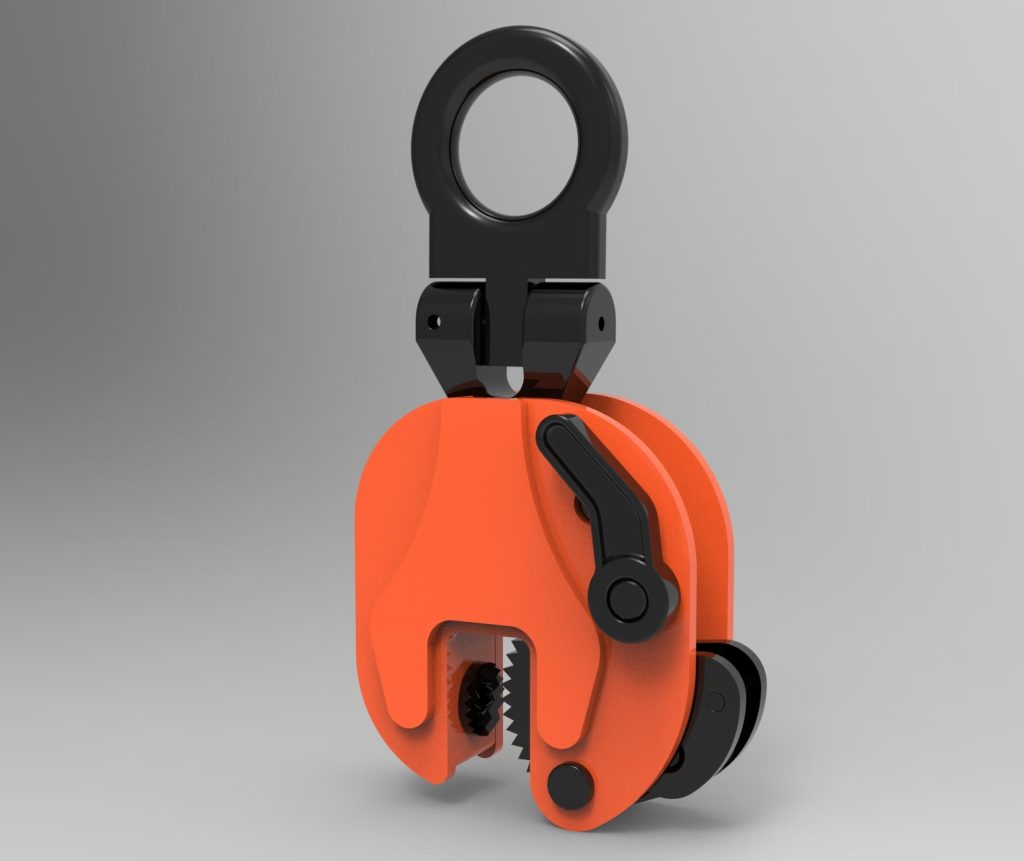
The CD clamp is recommended when operations involve:
- Steel plate turning
- Plate positioning
- Fabrication workshops
- Shipbuilding
- Steel structure manufacturing
- Multi-directional lifting
- Crane operations requiring load rotation
The rotating shackle offers maximum flexibility when handling large or irregularly positioned steel plates.
When to Choose the CDH Model
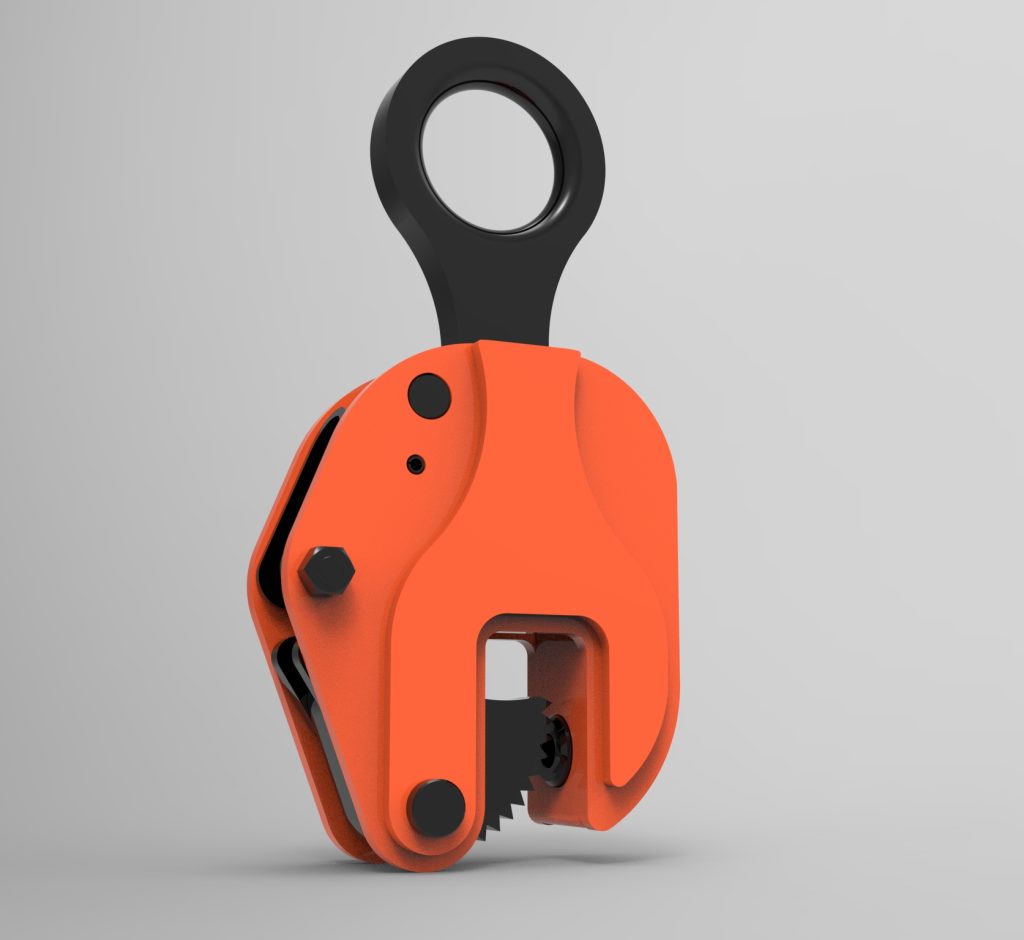
The CDH clamp is ideal for:
- Standard vertical lifting
- Warehousing operations
- Steel service centers
- Loading and unloading trucks
- Manufacturing plants
- Repetitive lifting tasks
Its fixed shackle design provides a straightforward and economical solution for everyday lifting applications.
Industries That Commonly Use CD and CDH Clamps
Both models are widely used in:
- Steel processing facilities
- Metal fabrication workshops
- Construction projects
- Shipyards
- Heavy equipment manufacturing
- Bridge construction
- Energy infrastructure projects
- Logistics and material handling operations
How to Select the Right Vertical Lifting Clamp
When choosing between CD and CDH, buyers should consider the following questions:
Does the load need to be rotated?
If yes, select the CD model.
Is plate turning part of the operation?
The CD model is the better choice.
Is the application only vertical lifting?
The CDH model provides an efficient solution.
Is budget a major concern?
The CDH model generally offers a lower purchase cost.
Is maximum flexibility required?
The CD model is designed for demanding lifting environments.
Conclusion
Although CD and CDH vertical lifting clamps share many safety and performance characteristics, their lifting ring structures serve different operational needs.
The CD model features a 360° Rotating Shackle, making it the preferred solution for lifting, positioning, and turning steel plates. Its enhanced flexibility makes it suitable for demanding industrial environments.
The CDH model features a Fixed Shackle, offering a stable and economical solution for standard vertical lifting applications where rotation is not required.
Both models are equipped with:
- Dual-Spring Self-Locking Mechanism
- Heat-Treated Gripping Components
- Alloy Steel Construction
- 4:1 Safety Factor
- Reliable Vertical Lifting Performance
By understanding these structural differences, distributors, contractors, and industrial buyers can select the most suitable lifting clamp for their specific handling requirements