TEL:+86 13179668188 E-MAIL:alina@volsn.com



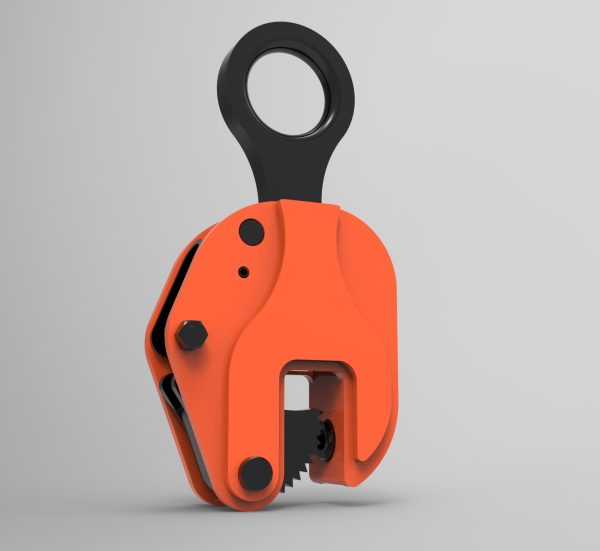
CDH VERTICAL LIFTING CLAMP
Safety Rigging & Load Specifications
For secure rigging configurations, the structural load and setup must strictly adhere to the following stability protocols:
-
Paired Utilization (Recommended): While individual clamps can lift stable sections, we strictly recommend using CDH clamps in pairs (2 units) or in combination with a lifting beam for extra-long plates to prevent severe swinging and out-of-balance stress.
-
Minimum Load Threshold: To engage the safety spring mechanism effectively, the suspended load must represent at least 10% of the clamp’s rated Working Load Limit (WLL).
-
Single-Plate Restriction: The CDH lifting clamp is designed exclusively for hoisting one single steel plate per liftcycle. Under no circumstances should multiple sheets or layered plate stacks be lifted simultaneously.
Operating Instructions & Pre-Lift Checklist
-
Inspect the Safety Lock: Before hoisting, manually check the spring-loaded safety lever. Ensure it latches tightly in both the open and closed positions.
-
Fully Insert the Plate: Slide the clamp mouth over the steel plate until the plate edge makes complete, flush contact with the innermost throat of the clamp body.
-
Engage the Lever: Flip the locking lever to the closed position, allowing the induction-hardened teeth to apply mechanical pre-tensioning to the plate surface.
-
Perform a Trial Lift: Hoist the load roughly 50–100mm off the ground to verify balance and check for zero slippage before commencing full lateral or vertical transport.
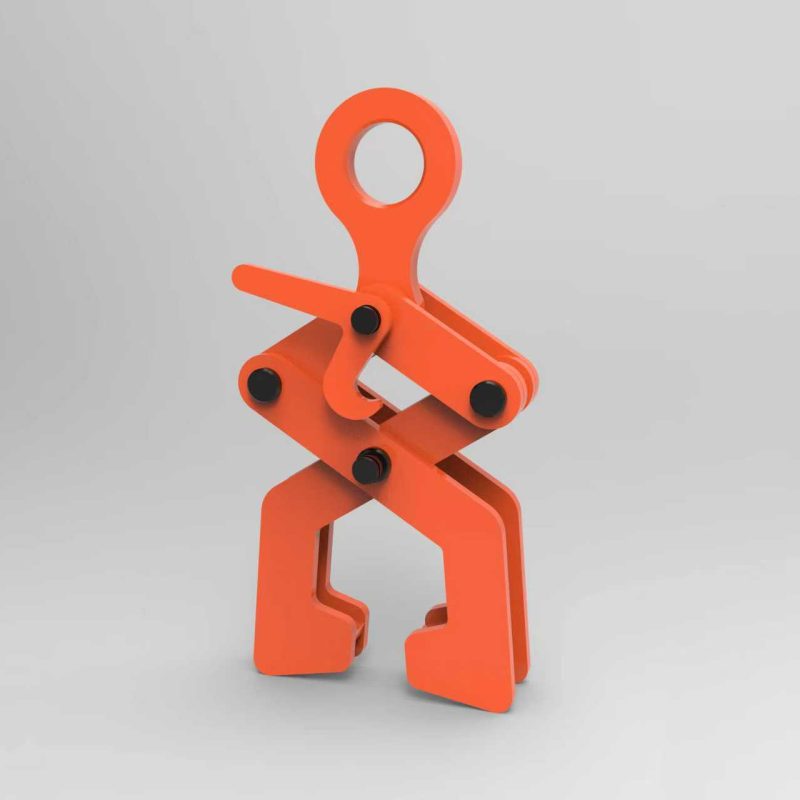
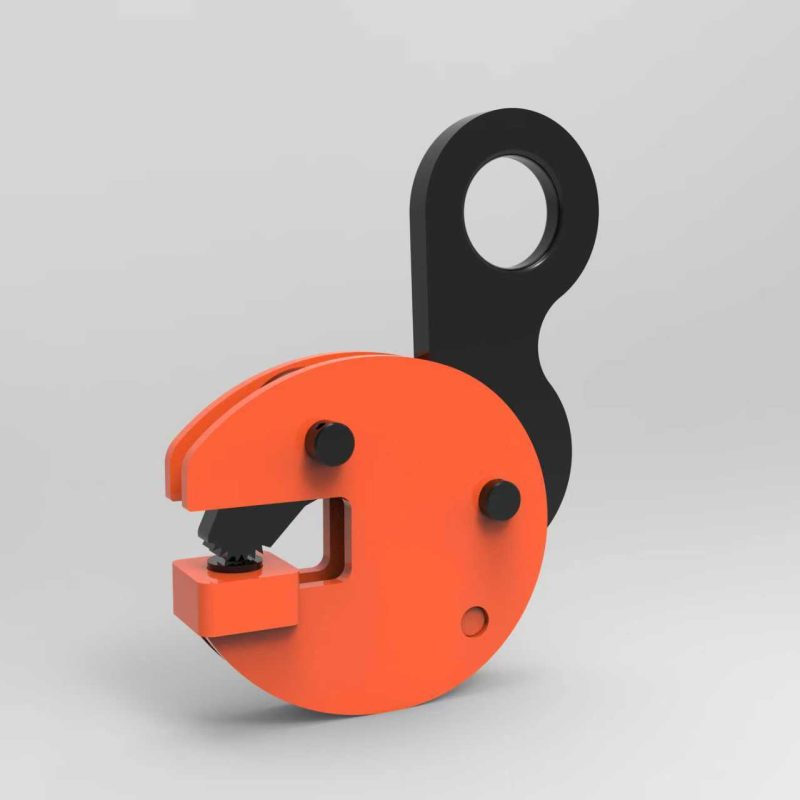
The VOLSN CDH Vertical Lifting Clamp is a standard industrial rigging tool engineered exclusively for the vertical lifting, hoisting, and lateral transport of steel plates and concrete structures. Featuring a rigid, non-articulated standard rigging eye, it provides an optimized, direct line of force for steady vertical orientation. Built with a high-strength forged alloy steel body and a 5:1 safety factor, the CDH clamp incorporates an automatic pre-tensioned locking lever to guarantee secure, slip-free clamping for steel surface hardness up to 37 HRC.
- Rigid Standard Rigging Eye for Steady Hoisting: Designed with a fixed, heavy-duty rigging eye, the CDH clamp ensures a direct alignment of the lifting force during purely vertical transport. This non-articulated structure minimizes plate swaying and shifting during linear crane movements.
- Rigid Standard Rigging Eye for Steady Hoisting: Designed with a fixed, heavy-duty rigging eye, the CDH clamp ensures a direct alignment of the lifting force during purely vertical transport. This non-articulated structure minimizes plate swaying and shifting during linear crane movements.
- Induction-Hardened Forged Cam & Jaw: The structural core features high-grade forged alloy steel teeth that resist deformation under extreme structural loading. It delivers optimal friction grip for industrial carbon steel plates up to 37 HRC (345 HB).
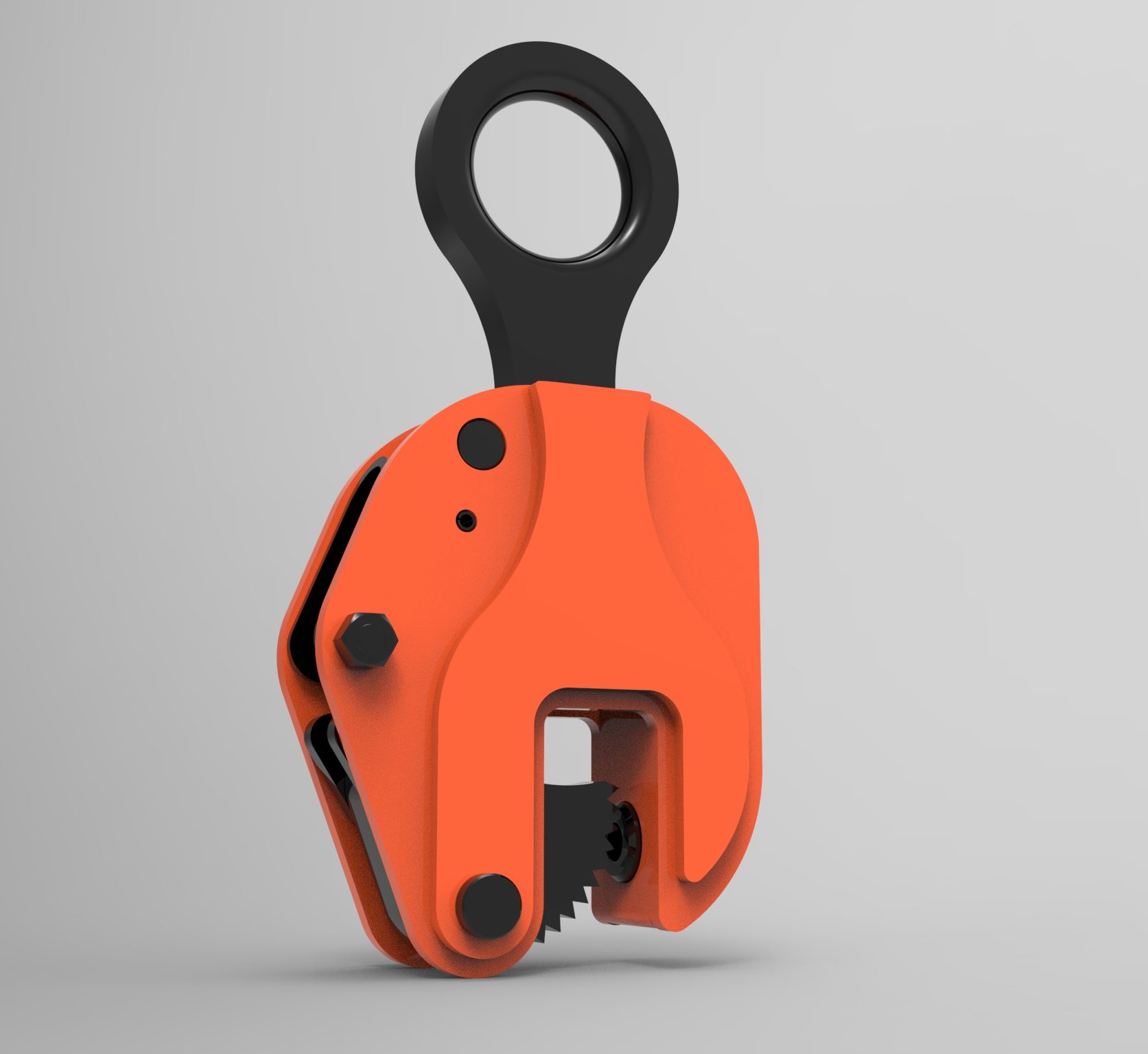

Note: The CDH model is strictly rated for linear vertical lifting. For applications requiring multi-directional or 180-degree turning, please refer to our CD series with articulated shackles.
-
Q1: Can the CDH vertical lifting clamp be used for turning or flipping steel plates?
-
A1 : No, the CDH clamp must not be used for turning or flipping plates. Its fixed rigging eye is engineered strictly for straight-line vertical hoisting; any side-loading or angular force will compromise safety and damage the clamp body.
-
-
Q2: What is the maximum material hardness the CDH clamp can safely grip?
-
A2 : The maximum allowable surface hardness for standard CDH clamps is 37 HRC (345 HB). Using it on harder materials like stainless steel or specialized armor plates may prevent the forged teeth from biting into the surface, causing potential slippage.
-
-
Q3: What safety standards does the VOLSN CDH clamp comply with?
-
A3 : Every CDH vertical clamp is manufactured in compliance with international rigging safety regulations, including ASME B30.20, EN 13155, and AS 4991, and undergoes a 200% proof-load test before factory clearance.
-