TEL:+86 13179668188 E-MAIL:alina@volsn.com



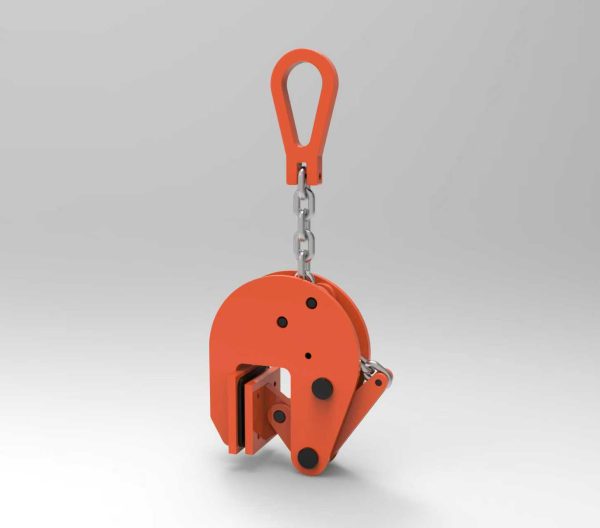
CDNM LIFTING CLAMP
Key Technical Features:
• 100% Mark-Free Lifting: Features specialized protective friction pads that secure the load entirely through clamping force without piercing or scratching the material surface.
• Heavy-Duty Safety Lock: Integrated with a robust safety locking mechanism to keep the clamp securely closed before, during, and after the lifting cycle.
• Multi-Material Compatibility: Perfect for delicate non-ferrous metals, including high-grade stainless steel, aircraft-grade aluminum, brass, and coated plates.
Primary Applications & Lifting Scenarios:
• Surface-Sensitive Rigging: Ideal for metal fabrication shops, laser cutting centers, stainless steel tank production, and architectural panel installation.
• Vertical Transport: Specially calibrated for turning, flipping, and lifting sheets vertically without causing deformation to thin or polished materials.
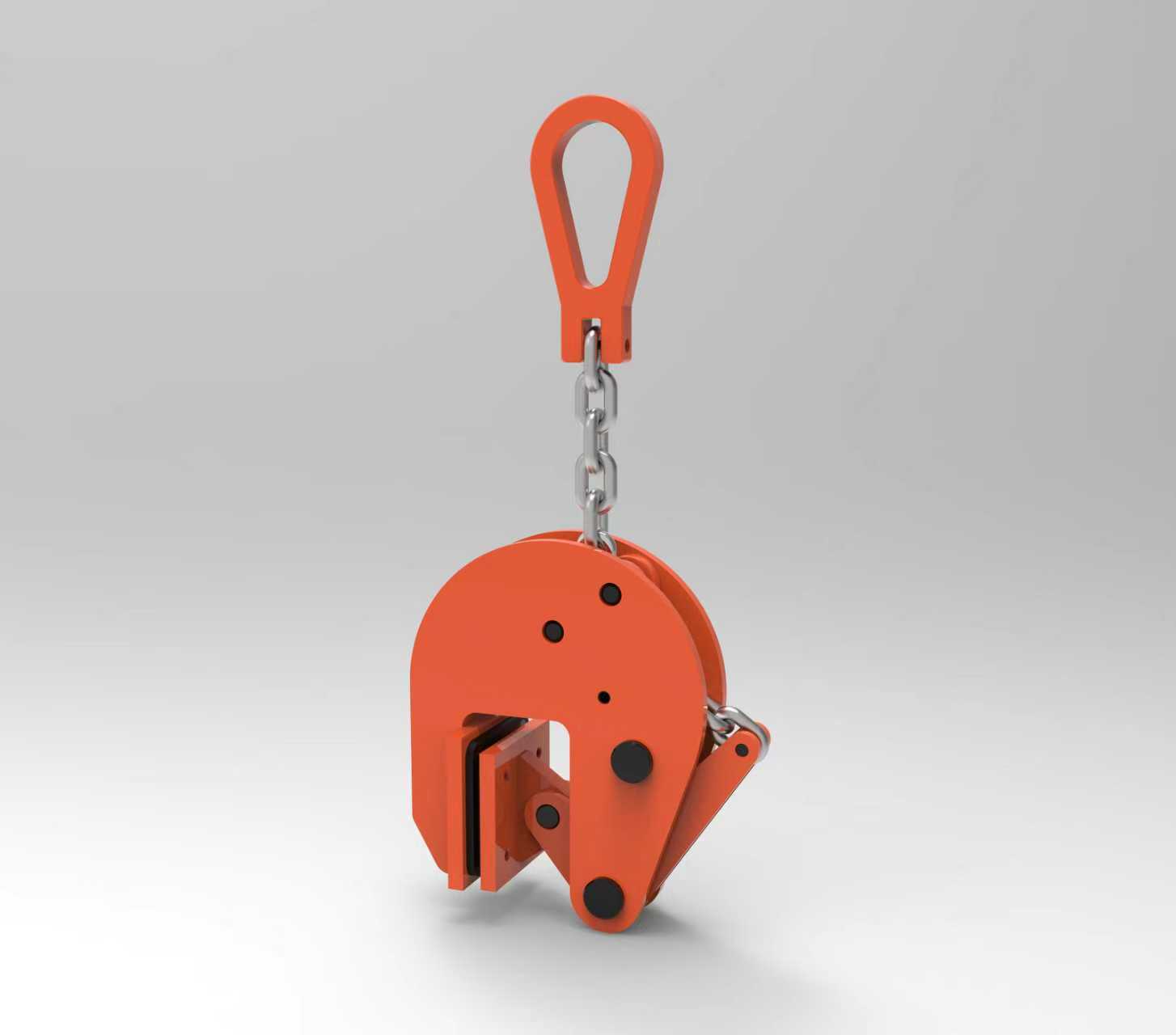
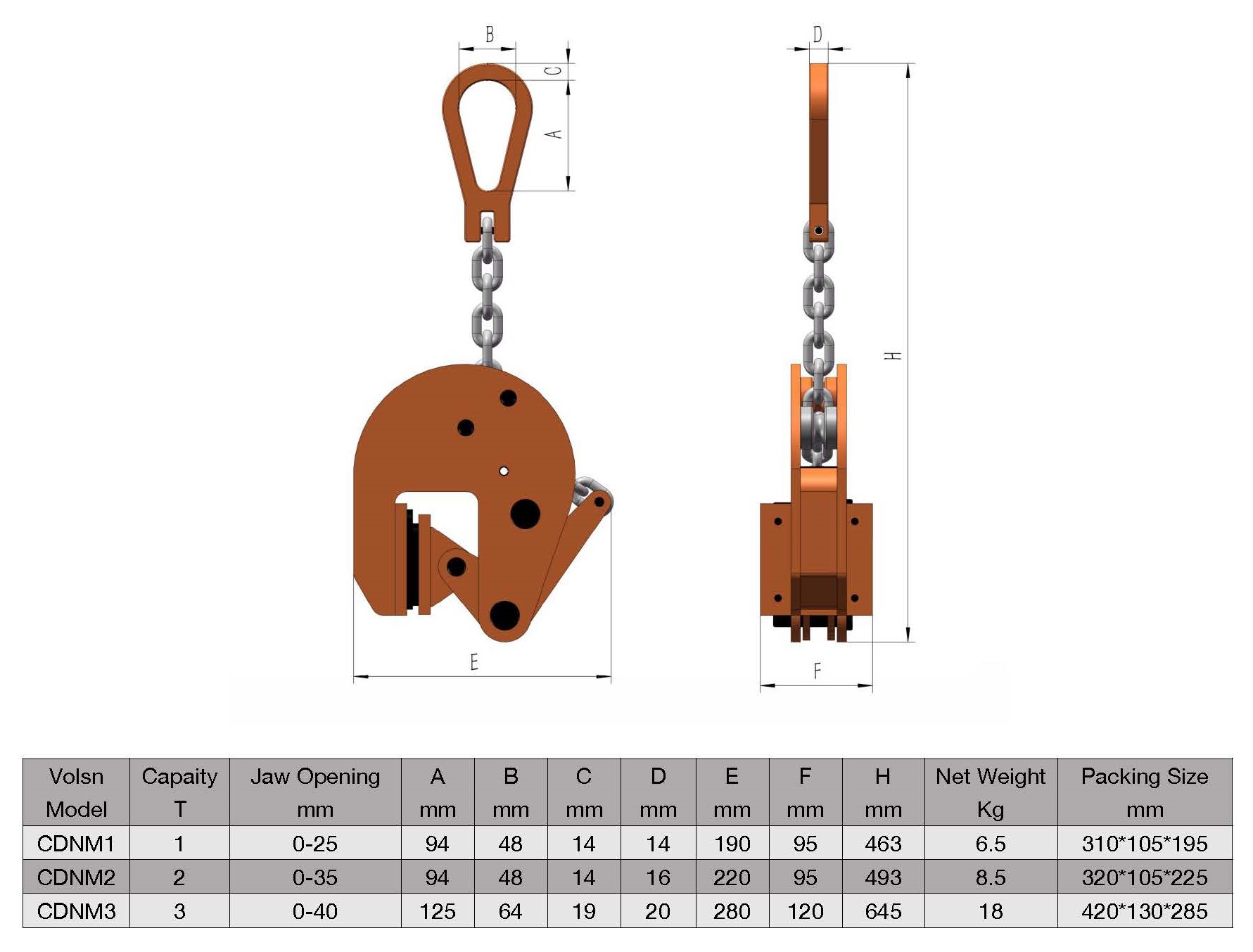
VOLSN CDNM series non-marring vertical lifting clamps are heavy-duty engineering solutions designed for the mark-free, safe transport of surface-sensitive plates. Engineered to fully comply with EN13157 rigging standards, the CDNM series replaces conventional sharp serrated metal teeth with advanced, high-friction protective pads. These specialized non-marring pads grip materials entirely through highly calibrated clamping force, leaving zero scratches, marks, or indentations on delicate materials such as high-grade stainless steel, aluminum, brass, copper, and polished steel sheets. This makes the CDNM series ideal for precision metal fabrication, aircraft manufacturing, and architectural stainless steel tank production. For maximum operational safety and to satisfy strict third-party audits, each individual unit is laser-engraved with a unique serial number and supplied with an official Mill Test Certificate (MTC).
Rigging and safety engineers must follow strict technical boundaries during operation. First, because non-marring lifting clamps rely entirely on friction rather than material penetration to secure the load, establishing a firm initial grip is critical. Operators must always apply a minimum load of at least 10% to 20% of the clamp’s rated Working Load Limit (WLL); lifting plates that fall below this minimum load threshold is extremely dangerous and strictly prohibited. Second, for a secure and slip-free lift, the surface of the lifted steel or aluminum plate must be completely dry, clean, and entirely free of oil, grease, scale, rust, paint, ice, or moisture coatings, as any contamination severely reduces the coefficient of friction. Third, the protective non-marring friction pads must be visually inspected before every lifting cycle and must be replaced immediately with original VOLSN replacement parts if they exhibit deep wear grooves, cracking, or any wear that reduces the effective thickness or contact surface area of the pad by more than 10%.
 FAQ
FAQ
Q1: What is the minimum load requirement for a CDNM non-marring vertical lifting clamp?
Answer:Because non-marring lifting clamps rely entirely on friction rather than material penetration to hold the load, establishing a secure initial grip is critical. To guarantee adequate initial friction and prevent the plate from slipping during movement, you must always apply a minimum load of at least 10% to 20% of the clamp’s rated Working Load Limit (WLL). Lifting plates that fall below this minimum load threshold is dangerous and strictly prohibited.
Q2: Can CDNM clamps be used on oiled, greased, or ultra-hard material surfaces?
Answer:No. For a safe lift, the surface of the lifted steel or aluminum plate must be completely dry, clean, and free of oil, grease, scale, rust, paint, ice, or moisture coatings. Any surface contamination severely reduces the coefficient of friction, rendering the pads ineffective and increasing slippage risks. Additionally, ensure the plate’s surface hardness is within the manufacturer’s specified limits to allow optimal friction pad engagement.
Q3: When should the protective friction pads be replaced, and what are the maintenance protocols?
Answer:The friction pads must be visually inspected before every lifting operation. If the pads accumulate metal shavings, dust, or grease, they must be cleaned immediately. The non-marring jaw pads must be replaced immediately with original VOLSN replacement parts if they exhibit:
1. Deep wear grooves or cracking on the contact surface.
2. Contamination that cannot be removed.
3. Wear that reduces the effective thickness or surface area of the pad by more than **10%**. Operating with worn pads compromises the safety factor and invalidates the safety certificate.